
why-pmsm-for-industrial-fans-effectively-cuts-energy-loss-of-large-factory-ventilation-systems, why-pmsm-for-industrial-fans-effectively-cuts-energy-loss-of-large-factory-ventilation-systems, /blog
EN

2026/09/09
A paint shop in Jiangsu ran twelve large exhaust fans on IE2 induction motors with inlet dampers. The booth airflow was right, but the electricity line for ventilation kept climbing as production rose. After a trial swap to a PMSM for Industrial Fans on the four biggest units, the measured ventilation kilowatt-hours dropped by close to a third at the same airflow. The saving came not from a bigger impeller but from removing the losses an induction fan carries at every speed. The case shows that in large ventilation the motor choice, more than the duct, sets the running cost of the system.
The trial covered only four of twelve fans, yet the meter on that circuit fell sharply. Production volume stayed flat, so the drop was real, not a quiet week. A PMSM for Industrial Fans earned its place on the spec list that afternoon, and the plant scheduled the remaining eight for the next shutdown window without debate among the team.
An induction motor runs a few percent below synchronous speed, and that slip is loss turned into heat in the rotor. At part load the share grows, so the fan wastes energy when airflow demand is low. A PMSM for Industrial Fans has no slip, because the magnet rotor turns with the field, so that heat simply does not exist in the machine at the plant.
The magnet rotor changes where the input power goes. With no field current drawn from the supply, the stator current becomes torque, and the efficiency curve stays high across the band. A PMSM for Industrial Fans turns that saved loss into airflow the booth actually needs, so the same ventilation job costs less at every shift. The plant sees the drop first on the submeter, then on the monthly bill from the utility. That is why a PMSM for Industrial Fans beats even a good induction unit by several points at the same duty, not just at the rated point on the nameplate.
The magnet rotor needs no stator current to make its field, so there is no rotor copper loss to shed as heat. The input power becomes airflow, not warmth in the bearing housing. This single change is why the unit beats even a good induction fan by several points at the same duty on the floor of the plant. A PMSM for Industrial Fans also stays cool under the load, because less loss means less heat to remove from the motor. The cooler running extends the bearing life and trims the service calls across the year of operation.
Because there is no slip and no excitation drag, the efficiency curve stays high from mid load to full. A unit that holds 94 to 96 percent from 30 to 100 percent flow means the ventilation cost scales with air, not with a penalty at low turn. The PMSM for Industrial Fans rewards the part-load hours that dominate most plants across a shift. A PMSM for Industrial Fans keeps that edge only when the drive is set to speed control, not to a fixed high speed with a damper. The control choice decides whether the lab saving reaches the floor or stays on the datasheet at the site.
Fan efficiency is measured, not claimed, and the codes give the plant a defensible number to quote. Specifying a PMSM for Industrial Fans inside a compliant package turns a vague saving into a figure the energy auditor accepts. The standards also steer the control method toward speed, where the real gain lives for the site.
ISO 12759 sets the minimum efficiency for fans and defines how to measure the system, not just the bare motor. AMCA 205 guides fan-system energy management, steering away from damper throttling toward speed control. Enneng Motor provides the test report so the PMSM for Industrial Fans result drops into the audit without extra measurement work by staff.
ISO 50001 requires a measured energy baseline and tracked savings. Logging the ventilation kilowatt-hours before and after the swap satisfies that loop. The PMSM for Industrial Fans test report feeds straight into the plant's ISO 50001 register, which keeps the saving visible to management every quarter of the year.
The hardware does the work, but the discipline captures it. Metering, tuning, and a clean air path decide whether the lab saving survives contact with the floor. A PMSM for Industrial Fans holds its efficiency only if the system around it is run the way the curve was drawn for the duty.
Meter the ventilation circuit for two weeks at normal production before any change, then swap one line and meter it the same way. Set the drive to control flow by speed with a soft accel and a tight loop. A PMSM for Industrial Fans wants to live in the mid band, where the ventilation loss is smallest and the motor stays cool through the day.
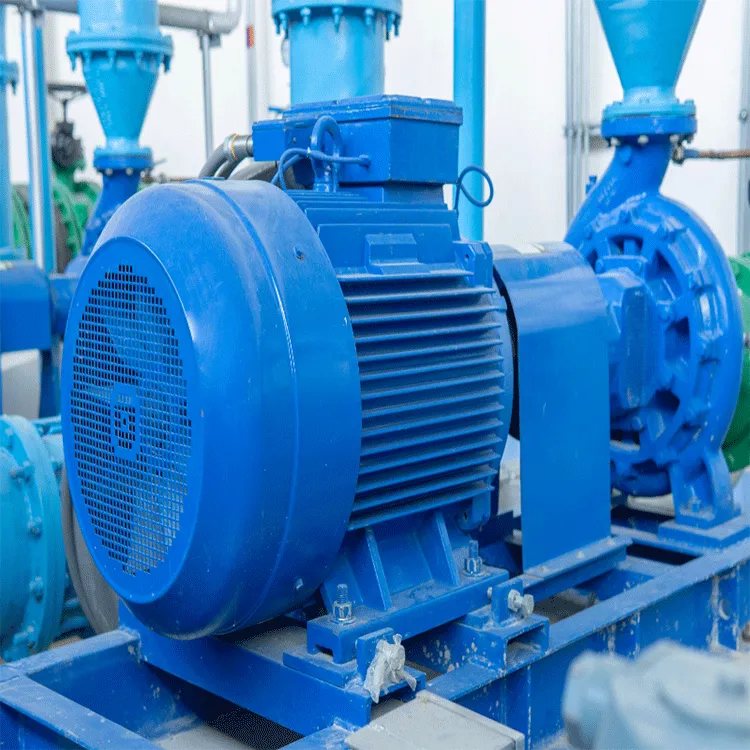
A dirty wheel or a clogged filter adds pressure the motor must overcome, eroding the saving. Keep the intake clean and re-balance the wheel yearly. The PMSM for Industrial Fans will hold its efficiency, but only if the air path stays as designed; neglect in the duct costs the same as a weak motor would on site. A PMSM for Industrial Fans keeps its edge only while the air path stays clean, so the intake screen and the filter belong on the same weekly round as the drive. Skipping that round quietly spends the saving the new motor was bought to capture for the plant.
Answer: In a measured swap the ventilation kilowatt-hours dropped close to a third at equal airflow, because slip loss and throttling waste both disappear. The exact figure depends on how much the system runs below design flow. Metering two weeks before and after the change gives the real number for that plant and that duty band on site.
Answer: No, but part load is where it shines. The PMSM for Industrial Fans keeps a flat efficiency curve from mid to full flow, while an induction fan falls off the rated point. At full flow the gain is smaller, yet across a normal shift the part-load hours dominate, so the annual saving stays large for the ventilation system.
Answer: Keep it as a manual isolation, but stop using it to trim flow. Set the flow by drive speed instead, so the PMSM for Industrial Fans runs in its efficient band. Running a throttled damper with a good motor wastes the very advantage the swap was meant to deliver on the floor each day at the site.
Answer: ISO 12759 defines the measured fan efficiency and AMCA 205 guides the system control method. Quote both when presenting the case. Enneng Motor ships the test report so the PMSM for Industrial Fans figure drops into the ISO 50001 register without extra measurement work by the plant team. Both standards are accepted by most auditors, which saves a second round of testing and keeps the retrofit on its published payback schedule without surprise cost.
Answer: Yes, and it often adds saving. Re-matching the wheel to the true duty lets the fan sit at its best point while the PMSM for Industrial Fans supplies the torque. Re-balance after fitting. The motor change is the right moment to fix a wheel that was oversized for the actual airflow demand on site.
Answer: Keep the intake and filter clean, tune the drive to speed control, and re-balance the wheel yearly. The PMSM for Industrial Fans holds its efficiency if the air path stays as designed. Neglect in the duct costs the same as a weak motor would, so the discipline matters as much as the hardware installed at the plant.


 EN