
 EN

When an industrial fan upgrade is evaluated, the motor nameplate often gets most of the attention. Fair enough, but it can hide the larger system question: how much of the electrical energy reaches the impeller after it passes through every intermediate component? A PMSM for Industrial Fans can improve that chain by supplying usable low-speed torque directly to the fan, rather than sending motor output through a reduction gearbox or another intermediate transmission stage.
That is not an argument that every geared fan wastes unacceptable energy, or that every retrofit should become direct drive. The point is that a gearbox has an efficiency of its own, along with lubrication, seals, bearings, alignment requirements, and a speed ratio that may no longer suit the real duty cycle. If the fan can be driven directly at its required speed and torque, those conversion losses and service dependencies can be designed out of the system.
Energy waste starts with the complete drive train
A geared fan train is more than an induction motor plus an impeller. Electrical input is converted to shaft output at the motor, transferred through couplings and gears, and finally delivered to the fan. Each interface has friction, windage, bearing drag, lubricant churning, or alignment sensitivity. Overall efficiency is the product of the individual component efficiencies, so a good motor cannot fully recover energy that is lost downstream.
This matters most when a transmission was originally installed to reconcile a high motor speed with a lower impeller speed. The speed reduction solves a mechanical matching problem, but it also creates a permanent loss path whenever the fan runs. A PMSM for Industrial Fans changes the design choice: the motor can be selected to produce the necessary torque at a speed much closer to the impeller’s required operating point.
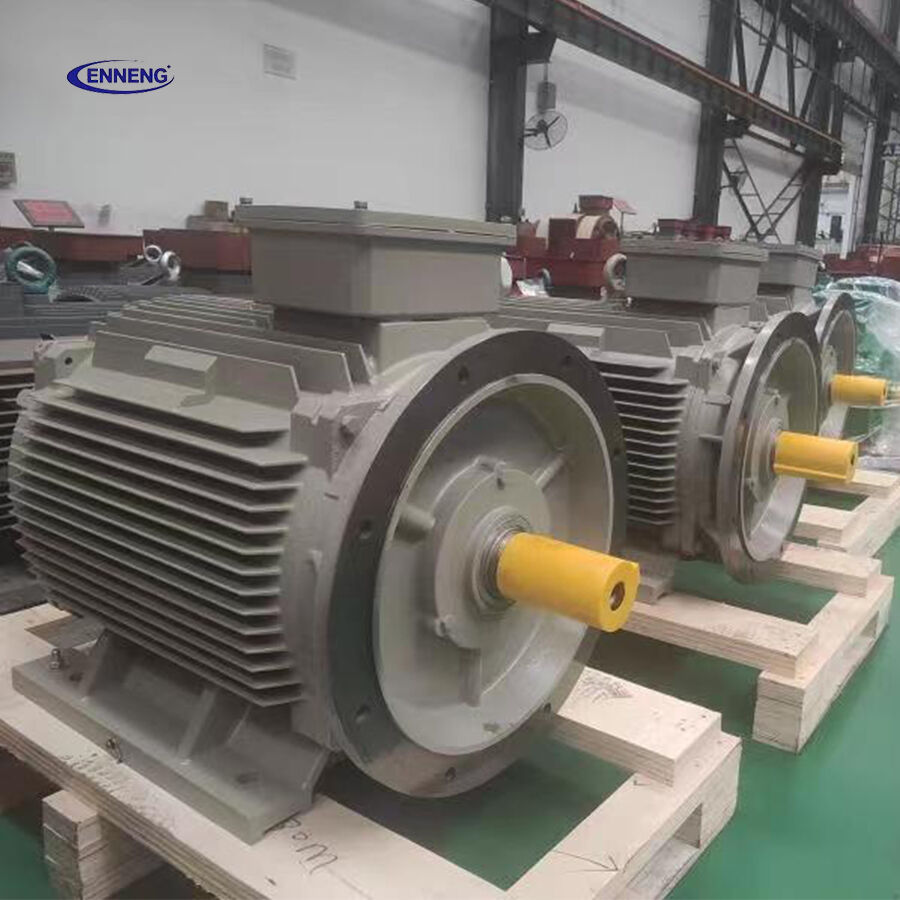
How a PMSM direct-drive fan removes the loss path
A Permanent Magnet Motor PMSM uses rotor magnets instead of relying on rotor current to establish its magnetic field. With an appropriate controller, it can provide controlled torque across a wide speed range. In a direct-drive fan, the motor shaft is coupled directly to the impeller or hub, so no reduction gearbox is required to translate motor speed into fan speed.
- No gear-mesh loss: torque does not pass through meshing teeth and lubricant films before reaching the fan.
- Fewer rotating interfaces: removing a gearbox can remove associated bearings, seals, couplings, and alignment checks from the transmission section.
- Better speed matching: the controller can command the fan speed that the air system needs instead of using mechanical reduction and then restricting flow.
- Lower maintenance exposure: there is no gearbox oil condition, oil leak, or gear wear pattern to monitor.
- That does not mean the motor itself becomes loss-free. Copper loss, iron loss, bearings, cooling, and the controller still matter. The more useful engineering claim is narrower: PMSM for Industrial Fans can remove an intermediate mechanical loss mechanism while enabling a motor-and-control package matched to the actual fan load.
Why speed control makes the architecture more valuable
Industrial ventilation demand is often variable. For geometrically similar fan operation, the familiar affinity relationships indicate that airflow changes roughly with speed, pressure with the square of speed, and power with the cube of speed. For planning purposes, a fan at half speed has an idealized power relationship of roughly 12.5% of full-speed power. Real systems must be checked against their fan curve, system resistance, controls, and minimum ventilation requirements, but the direction of the relationship is important.
In a fixed-speed geared system, operators commonly use dampers or other restrictions to control airflow. The motor and gearbox may continue to turn at a speed that is higher than the process requires. A direct-drive PMSM for Industrial Fans paired with a suitable variable-speed controller addresses the source of excess airflow instead: reduce rotational speed when demand falls. The direct path prevents the gearbox from consuming its own share of the energy while the fan operates at part load.
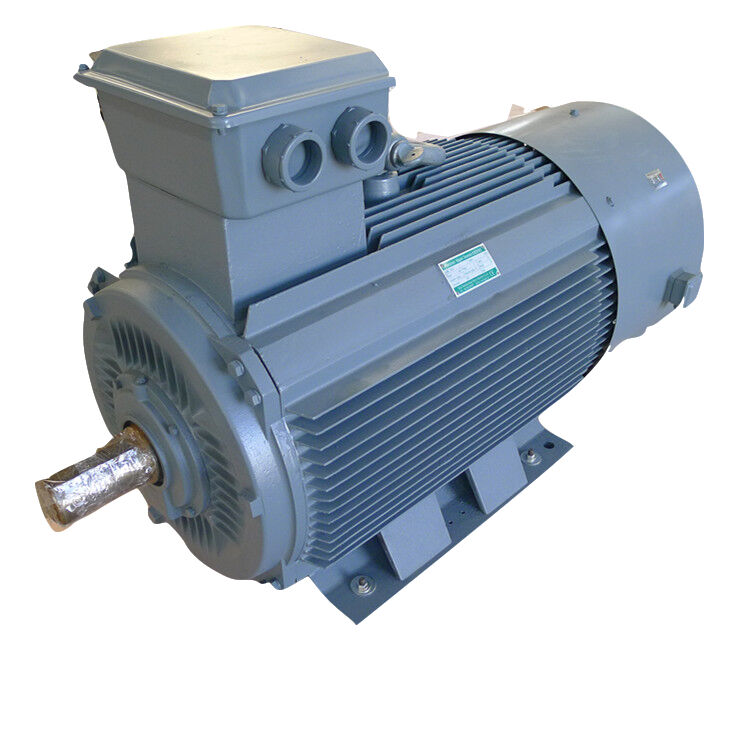
Direct drive is a system decision, not a motor swap
It is easy to talk about direct drive as a motor replacement. In the field, it is more than that. In practice, the impeller inertia, required starting torque, operating speed, duty cycle, mounting interface, and controller tuning determine whether the conversion will work well. A fan that needs high breakaway torque, frequent starts, or long low-speed operation requires an appropriately sized motor and thermal design.
Ambient conditions matter too. A higher ingress-protection option may be appropriate for dust or humidity, but enclosure choices can change heat rejection. Treating a motor power rating as a fixed number is fine for initial comparison; once ambient temperature, ventilation, and continuous low-speed torque are considered, the usable operating range can shift. Ask for a torque-speed curve and thermal limits under your actual site conditions, not only a nominal efficiency number.
Where intermediate gears are most likely to be a poor fit
Gear elimination is especially worth examining when a fan runs many hours, spends substantial time below full airflow, or operates where gearbox service is disruptive. Large circulation fans, exhaust systems, and process ventilation units can all fit this pattern. The operating team may care about less lubrication work and fewer mechanical parts; the engineer may care about torque margin and harmonics; procurement may care about lifecycle cost. A useful review should cover all three perspectives.
There are cases where a gearbox remains justified. Existing shaft geometry, unusual speed ratios, severe shock loading, or a retrofit budget that cannot accommodate controls and mechanical redesign may favor retaining it. Gears are not inherently the wrong answer. It is to compare the whole train—motor, controller, transmission, fan, controls, maintenance, and downtime risk—against a direct-drive alternative.
The ENNENG Customisation Advantage
No two industrial facilities share the same spatial or mechanical constraints. ENNENG stands out because we do not just supply off-the-shelf catalogue products; we specialise in delivering a tailor-made permanent magnet motor tailored to your specific application .
Supported by our elite R&D team consisting of engineers from the National Rare Earth Permanent Magnet Engineering Centre, and backed by dozens of patents, we customise high-voltage (6kV/10kV) and low-voltage (380V/660V/1140V) solutions to match your existing footprint. From water treatment facilities and oil wells to explosion-proof mining environments, we deliver optimal performance where general-purpose motors fail .
If you are evaluating commercial permanent magnet motors for sale and need an engineered drive solution that guarantees efficiency and longevity, ENNENG is your trusted partner.Contact ENNENG Today.Speak to our technical engineering team to receive a customised drive proposal.
- WhatsApp: +86 18562780228
- E-Mail: [email protected]
- Phone: +86 532 66000559
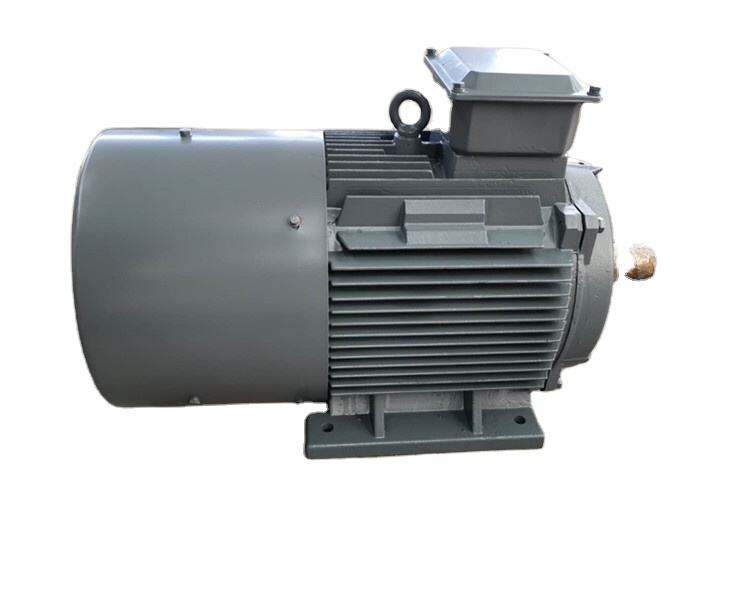
The takeaway
The practical case for PMSM for Industrial Fans is not a generic claim that permanent magnets are better. It is a drive-train argument. When a PMSM and controller can deliver the impeller’s required low-speed torque directly, an intermediate gear transmission no longer has to absorb energy, add service work, or constrain speed control. Verify the fan curve, torque-speed requirement, environment, and retrofit mechanics first. If the system supports direct drive, the energy benefit comes from matching production to demand while removing a mechanical loss path that the fan no longer needs.

