
why-pmsm-for-industrial-fans-improves-powerfactor-level-of-factory-internal-powersupply-network, why-pmsm-for-industrial-fans-improves-powerfactor-level-of-factory-internal-powersupply-network, /blog
EN

2026/09/09
A textile mill in Zhejiang ran 22 exhaust fans on induction motors with variable-frequency drives. The monthly utility bill carried a growing reactive-power penalty because the average power factor sat at 0.78, below the 0.90 the distributor required. The plant engineer first blamed the capacitor bank, then the old cabling, but the root cause was the fan drives. Each induction fan drew magnetizing current even at partial speed, so the bus stayed reactive-rich all shift. A PMSM for Industrial Fans was fitted to the six largest units as a trial, and within one billing cycle the average power factor rose to 0.93 without adding a single capacitor. The case shows that the motor type, not just the compensation gear, sets the power-factor ceiling of a factory network.
At 0.78 the mill paid roughly 8 percent more per kilowatt-hour of real energy, a charge that repeated every month. The penalty scales with the square of the reactive deficit, so small slips in power factor turn into large bills. Restoring the power factor is the fastest way to stop that leak, and the trial with a PMSM for Industrial Fans proved the leak was at the fan, not the meter on the wall.
An induction rotor needs a magnetic field supplied by reactive current from the supply. Even at 40 percent load the motor still pulls magnetizing VAr, so apparent power stays high while real power drops. The power factor falls exactly when the fan should be cheap to run. A PMSM for Industrial Fans removes that draw because the rotor field comes from magnets, not from grid current at the substation.
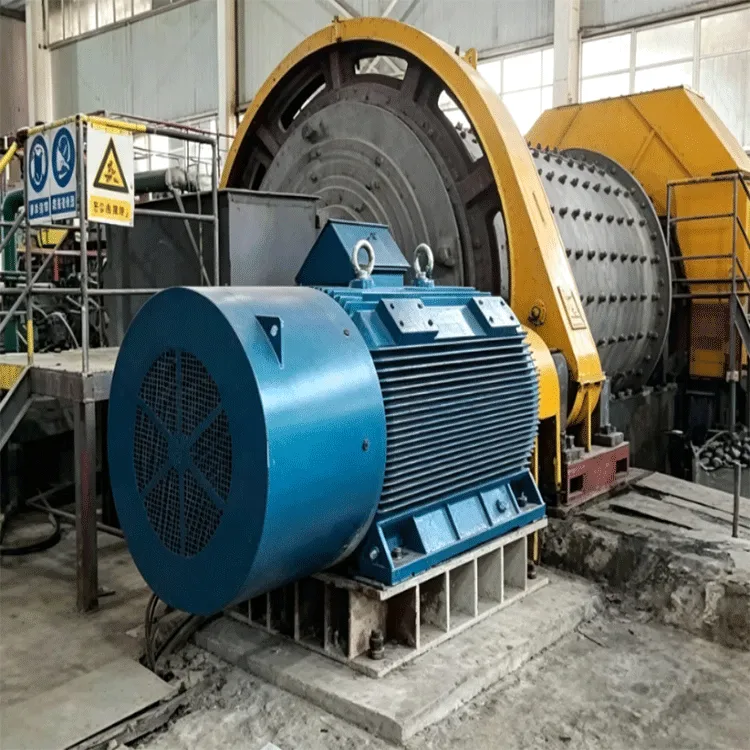
The permanent-magnet rotor changes the whole power balance of the drive. With no excitation current drawn from the bus, more stator current becomes torque-producing real current, and the unit can sit near unity power factor through the normal speed band. That is why a PMSM for Industrial Fans reads as a power-quality asset, not just a fan motor on the line.
The rotor of a PMSM for Industrial Fans carries bonded neodymium magnets, so no stator current is spent building the field. The full stator current becomes useful torque current. With the excitation load gone, the machine can hold near unity power factor across most of its range, the opposite of an induction fan that always lags the voltage behind.
A permanent-magnet machine runs synchronously, locked to the drive frequency. The converter shapes the current angle so the unit imports almost no reactive power, and in many retrofits the fan now exports a small capacitive VAr that offsets lag from nearby induction load. A PMSM for Industrial Fans lifts the whole bus power factor by cleaning up its own draw first on the network.
Power quality is not a vendor opinion; it is written in codes the distributor and inspector apply. Specifying a PMSM for Industrial Fans against these rules turns a vague better power factor claim into a defensible specification that survives audit and keeps the bus within the utility window all year.
IEEE 519 sets the allowable total harmonic distortion at the point of common coupling, and IEC 61000-3-2 governs harmonic current emission. A drive built to both keeps the bus safe for sensitive loads. Enneng Motor documents emission per model so the plant can file conformance before commissioning a PMSM for Industrial Fans line at the site.
NEMA MG 1 defines the performance envelope for synchronous machines, including pull-out torque and power-factor rating. A unit built to NEMA MG 1 gives the engineer a defensible number when the utility audits correction. The PMSM for Industrial Fans should ship with that test sheet attached for the record and the file.
The saving arrives from two sides: lower real losses and the removed penalty. Capturing both needs a meter before and after, plus a drive set to the right point. A PMSM for Industrial Fans pays back faster than an efficiency-only view suggests once the tariff gain is counted in the budget. The finance team should model the combined saving before approving the swap, because the penalty relief alone often clears the payback target. A PMSM for Industrial Fans that lifts the bus to 0.93 typically removes the monthly surcharge within two quarters, which makes the ventilation upgrade an easy line item to defend on the budget.
Pick a drive whose rated current covers fan full-load amps with 15 percent headroom and supports a unity-power-factor set point. Ask for the power-factor curve across 20 to 100 percent speed. Log the bus for one week before and after the swap at equal production, and keep the CSV so the PMSM for Industrial Fans result is provable to the utility.
Bonded magnets age slowly, but heat is the enemy. Keep the cooling path clear and watch the stator temperature trend. A PMSM for Industrial Fans needs no brush service, yet rewards a yearly thermal scan against the original test sheet. Keep the cooling air filter clear, because a blocked path is the fastest route back to a lagging power factor. Enneng Motor provides the baseline so drift shows up before the advantage fades on the bus during the audit season. Enneng Motor provides the baseline so drift shows up before the advantage fades on the bus.
Answer: In a typical retrofit the bus power factor moves from about 0.78 to 0.93 within one billing cycle when the largest fans are swapped. The exact gain depends on how many induction fans remain and their load profile. Logging the meter before and after the change gives the true number for that plant, which is the only figure the utility will accept during a review.
Answer: Often it reduces the capacitor duty, and in some lines the automatic bank stops switching because the bus stays in band. It does not remove the need for fixed compensation where large lagging loads remain. Treat the PMSM for Industrial Fans as a power-quality asset that lightens the bank, not a guaranteed replacement for all correction gear on site.
Answer: A compliant front end built to IEEE 519 and IEC 61000 keeps total harmonic distortion within limit, usually cleaner than the old VFD. Verify the emission data sheet at order. If the bus serves sensitive analyzers, add the recommended line reactor named in the drive manual to stay safe and compliant.
Answer: The saving comes from both sides. Lower real losses cut kilowatt-hour cost, and the removed power-factor penalty cuts the tariff on top. For a plant at 0.78 the penalty alone can be near 8 percent of the bill, so the PMSM for Industrial Fans pays back faster than an efficiency-only view suggests to finance.
Answer: Sustained heat above the rated class weakens bond and slowly drops flux, which trims torque and power factor. Watch stator temperature and keep the cooling path clear. A yearly thermal scan against the original test sheet catches drift early, before the PMSM for Industrial Fans loses its measured advantage on the bus at the plant.
Answer: In most cases yes, because the PMSM for Industrial Fans mounts to the same foot and shaft size. Confirm the speed and torque match the impeller curve, then re-balance after fitting. Right-sizing the impeller to the new flat efficiency curve can add saving beyond the motor swap alone for the ventilation system.


 EN