
 EN

Why PMSM for Industrial Fans Can Reduce Reactive-Power Compensation Investment
A fan retrofit is often justified with a kWh model, but the electrical-room consequence can be just as important. A PMSM for Industrial Fans can reduce the reactive-power burden associated with older induction-motor fan groups, which may let a manufacturing plant avoid adding as much capacitor-bank capacity during an expansion. That benefit is conditional, not automatic. The answer depends on the motor, the drive front end, the fan duty cycle, existing harmonics, and what the utility meter actually records.
For plant engineers, the useful question is not “does a Permanent Magnet Motor PMSM eliminate kVAR?” It does not. The better question is whether a proposed PMSM for Industrial Fans package changes the measured kW, kVAR, displacement power factor, and true power factor enough to reduce the compensation equipment that the plant would otherwise buy.
Why conventional fan motors create a compensation problem
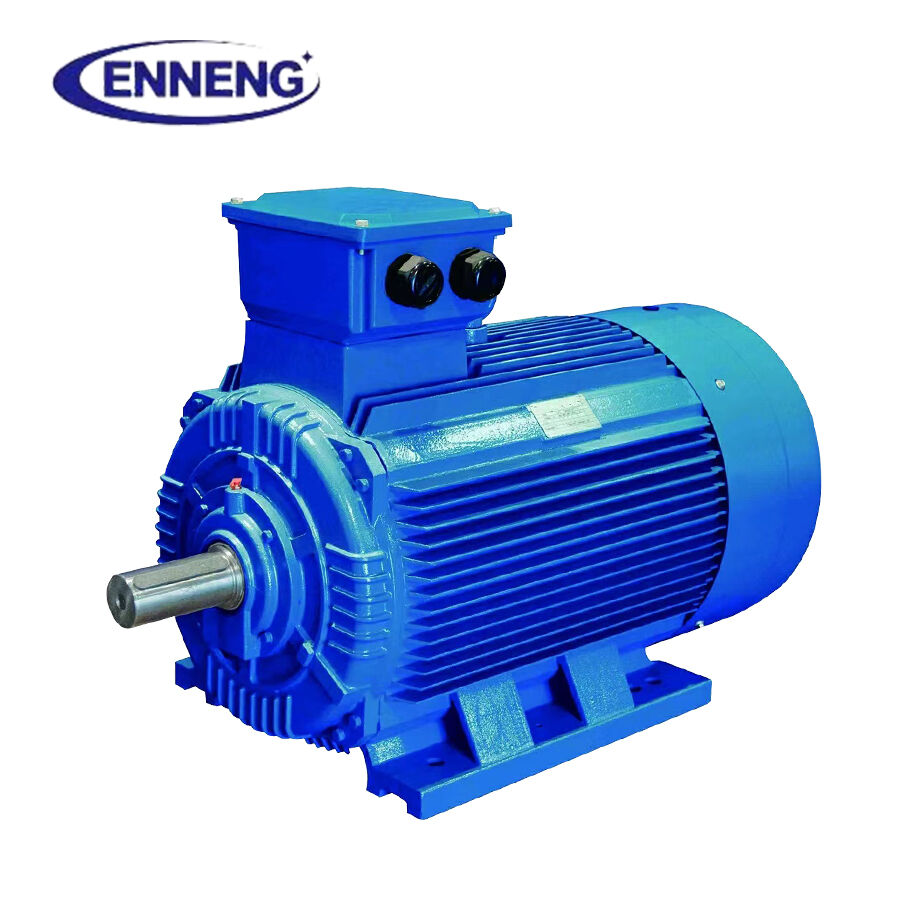
An induction motor needs magnetizing current to establish its rotor field. That current contributes reactive power, particularly when a motor is lightly loaded or oversized for its normal duty. A plant with many induction-driven exhaust, process-air, cooling, or ventilation fans can therefore accumulate lagging kVAR even when the fans are doing useful work.
Capacitor banks supply some of that reactive demand locally. They can lower upstream current and apparent power, but they introduce a separate procurement and maintenance decision: fixed or switched steps, contactors, detuned reactors, protection, controls, enclosure space, commissioning, and later coordination with non-linear loads. If the fan load changes, a fixed bank can also overcorrect at light load.
The sizing relationship also explains the financial connection: required compensation is based on real power multiplied by the difference between the tangents of the initial and target power-factor angles. In other words, the required kVAR is not a nameplate percentage. It follows the measured load and the target set by the utility, transformer capacity plan, or internal engineering standard.
What changes with a PMSM fan system
A PMSM for Industrial Fans uses permanent magnets rather than rotor magnetizing current to establish the rotor field. That can reduce the motor-side magnetizing demand compared with an induction motor performing the same fan duty. The gain tends to be most relevant when the existing fleet spends long periods below full load, which is common for fans controlled by dampers, inlet vanes, staged operation, or oversized motors.
However, a PMSM for Industrial Fans is usually a system, not simply a replacement motor. Its variable-frequency drive rectifies the incoming AC supply and synthesizes motor current. From the plant bus, the drive’s topology and input components determine whether the supply sees near-unity displacement power factor, harmonic current, or both. A high displacement power factor does not automatically mean low distortion or an acceptable true power factor.
That distinction is important in a real plant. An older induction fan with a capacitor bank may draw lagging fundamental reactive current. A modern PMSM for Industrial Fans package may lower that need, while the VFD still requires assessment for harmonics, resonance with existing capacitors, and compliance with the plant’s power-quality limits. So the opportunity is often to reduce conventional fundamental-kVAR correction, not to remove all power-quality equipment.
Where the investment reduction can come from
1. Less incremental kVAR to correct
When an expansion plan includes many new fans, each proposed PMSM for Industrial Fans installation can be evaluated as a load with different input characteristics from a direct-on-line induction fan. If measured or manufacturer-verified input data show lower lagging kVAR at the relevant operating points, the planned automatic capacitor bank may need fewer steps or a lower total rating. This can reduce equipment cost, panel footprint, and coordination work.
2. Lower fan kW changes the whole calculation
Variable-speed control is often the bigger lever. For centrifugal fan loads, reducing speed can sharply reduce required shaft power. If a PMSM for Industrial Fans solution also removes throttling losses and matches airflow to process demand, it can lower kW as well as reactive demand. A smaller real-power base means less kVAR is required to reach the same target power factor. Still, confirm the operating curve; a fan that genuinely runs at constant speed will not deliver the same control-related saving.
3. Better load matching reduces overcorrection risk
Plants commonly inherit capacitor banks sized for a previous mix of lightly loaded induction motors. Replacing part of that fleet with a PMSM for Industrial Fans can change the plant’s day and night kVAR profile. Reducing or reconfiguring excess fixed correction may avoid leading power factor and unnecessary switching. This is a system-integration benefit, not a reason to disconnect capacitors without a study.
A practical example without invented savings
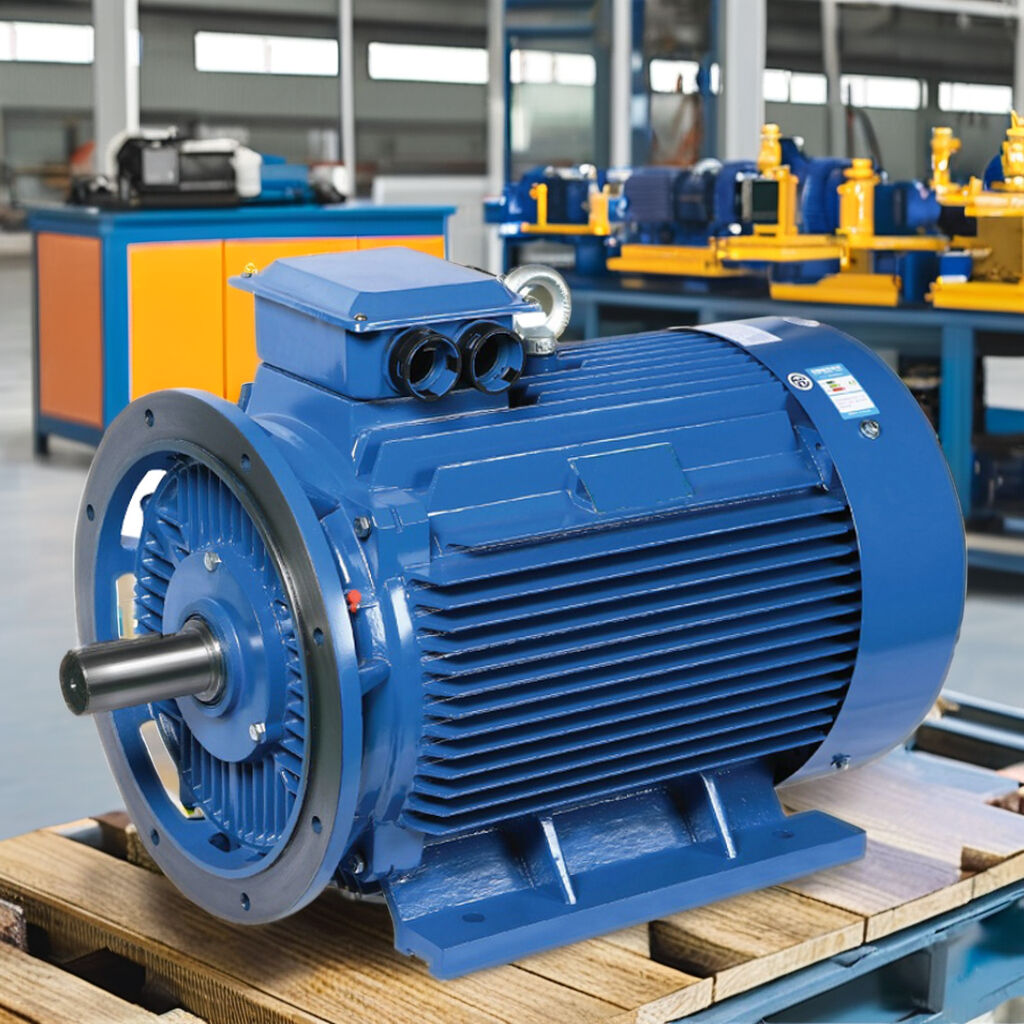
Consider a production building preparing to add several ventilation and cooling fans. The preliminary design assumes induction motors and a new automatic capacitor bank to maintain the plant’s target power factor. Before buying that bank, the team compares an alternative: a PMSM for Industrial Fans package with appropriately selected drives and control logic.
The team logs 15-minute demand data across representative shifts, then measures each candidate package at the actual speed range. It records kW, kVAR, current, displacement PF, true PF, voltage THD, current THD, and airflow. If the revised load study shows less fundamental lagging kVAR and lower kW, the compensation specification can be reduced accordingly. If harmonics rise or a resonance scan identifies a concern, the project may still need line reactors, active filtering, detuned capacitors, or a different drive front end. The relevant saving is the net avoided investment after power-quality mitigation, not a broad claim about magnets.
How to evaluate PMSM for Industrial Fans before changing the capacitor budget
- Baseline the plant: collect utility bills and interval data; measure kW, kVAR, PF, demand, THD, and capacitor-bank switching state at the main board.
- Map the fan duty cycle: identify speeds, airflow control method, hours at partial load, starts, seasonal changes, and simultaneous operation.
- Request input-side data: for every PMSM for Industrial Fans proposal, obtain drive topology, rated input current, displacement PF, harmonic data, recommended line impedance, and filter requirements at the intended operating points.
- Model the complete bus: include existing capacitors, transformers, other VFDs, welders, UPS loads, and generator operation. This is where a resonance issue can appear.
- Specify an acceptance test: commission the PMSM for Industrial Fans system with logged electrical and airflow results, then resize or retune correction equipment only from those results.
What procurement teams should compare
The purchase price of a PMSM for Industrial Fans solution is only one line in the comparison. Put motor, VFD, controls, reactor or filter, panel modifications, cable changes, capacitor-bank changes, installation downtime, and verification testing in the same cost model. A Permanent Magnet Motor PMSM may cost more initially, while the combined energy, maintenance, capacity, and avoided-compensation effect can improve the project case. It may not—especially where the existing load is already well corrected or a low-quality drive creates costly mitigation work.
For a technically grounded review, involve the motor supplier, VFD supplier, and the plant’s power-quality engineer early. A manufacturer with application-specific winding and motor-design capability can help define the motor operating envelope, but the facility must validate utility-side performance at its own point of common coupling.
The ENNENG Customisation Advantage
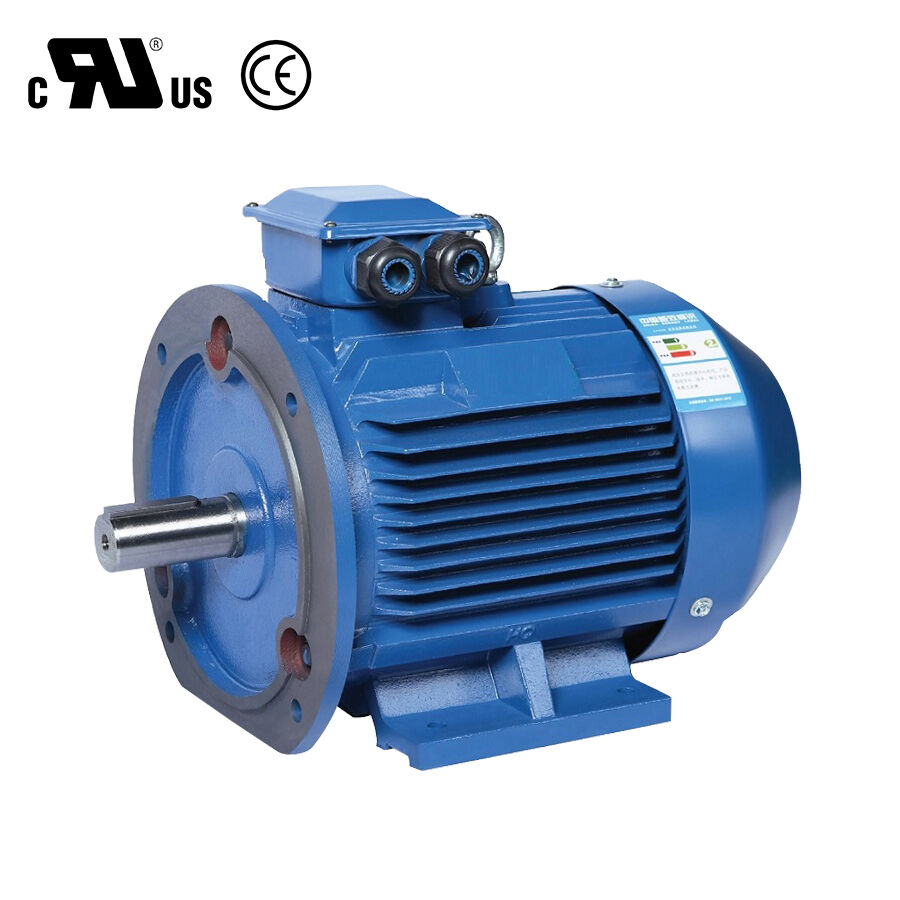
No two industrial facilities share the same spatial or mechanical constraints. ENNENG stands out because we do not just supply off-the-shelf catalogue products; we specialise in delivering a tailor-made permanent magnet motor tailored to your specific application .
Supported by our elite R&D team consisting of engineers from the National Rare Earth Permanent Magnet Engineering Centre, and backed by dozens of patents, we customise high-voltage (6kV/10kV) and low-voltage (380V/660V/1140V) solutions to match your existing footprint. From water treatment facilities and oil wells to explosion-proof mining environments, we deliver optimal performance where general-purpose motors fail .
If you are evaluating commercial permanent magnet motors for sale and need an engineered drive solution that guarantees efficiency and longevity, ENNENG is your trusted partner.Contact ENNENG Today.Speak to our technical engineering team to receive a customised drive proposal.
- WhatsApp: +86 18562780228
- E-Mail: [email protected]
- Phone: +86 532 66000559

