
why-should-industrial-buyers-focus-on-longterm-expenditure-in-pmsm-vs-induction-motor-cost-assessment, why-should-industrial-buyers-focus-on-longterm-expenditure-in-pmsm-vs-induction-motor-cost-assessment, /blog
EN

2026/09/30
A continuous-duty petrochemical synthesis plant operates forty 200 kW compressor and process pump drives around the clock to sustain volatile hydrocarbon cracking lines. In these baseload operations, rotating drive systems account for more than eighty percent of total plant electrical consumption. Plant procurement teams often evaluate equipment replacement choices under heavy balance-sheet pressure, frequently weighing initial equipment invoices against long-term operational expenditures.
Procuring industrial drive systems based strictly on low initial capital expenditure introduces severe operational vulnerabilities. Standard squirrel-cage induction motors suffer continuous electromagnetic slip and persistent rotor resistance losses, dissipating vast quantities of electrical power as waste heat. High thermal rise inside induction motor frames accelerates bearing grease oxidation, degrades stator winding insulation, and forces premature mechanical rewinds. In contrast, evaluating PMSM vs Induction Motor Cost through total lifecycle assessment reveals that permanent magnet synchronous motors drastically lower operating overhead. ENNENG supplies high-efficiency permanent magnet motor solutions that eliminate rotor excitation losses, allowing industrial processing facilities to cut lifecycle power bills and maximize return on capital investments.
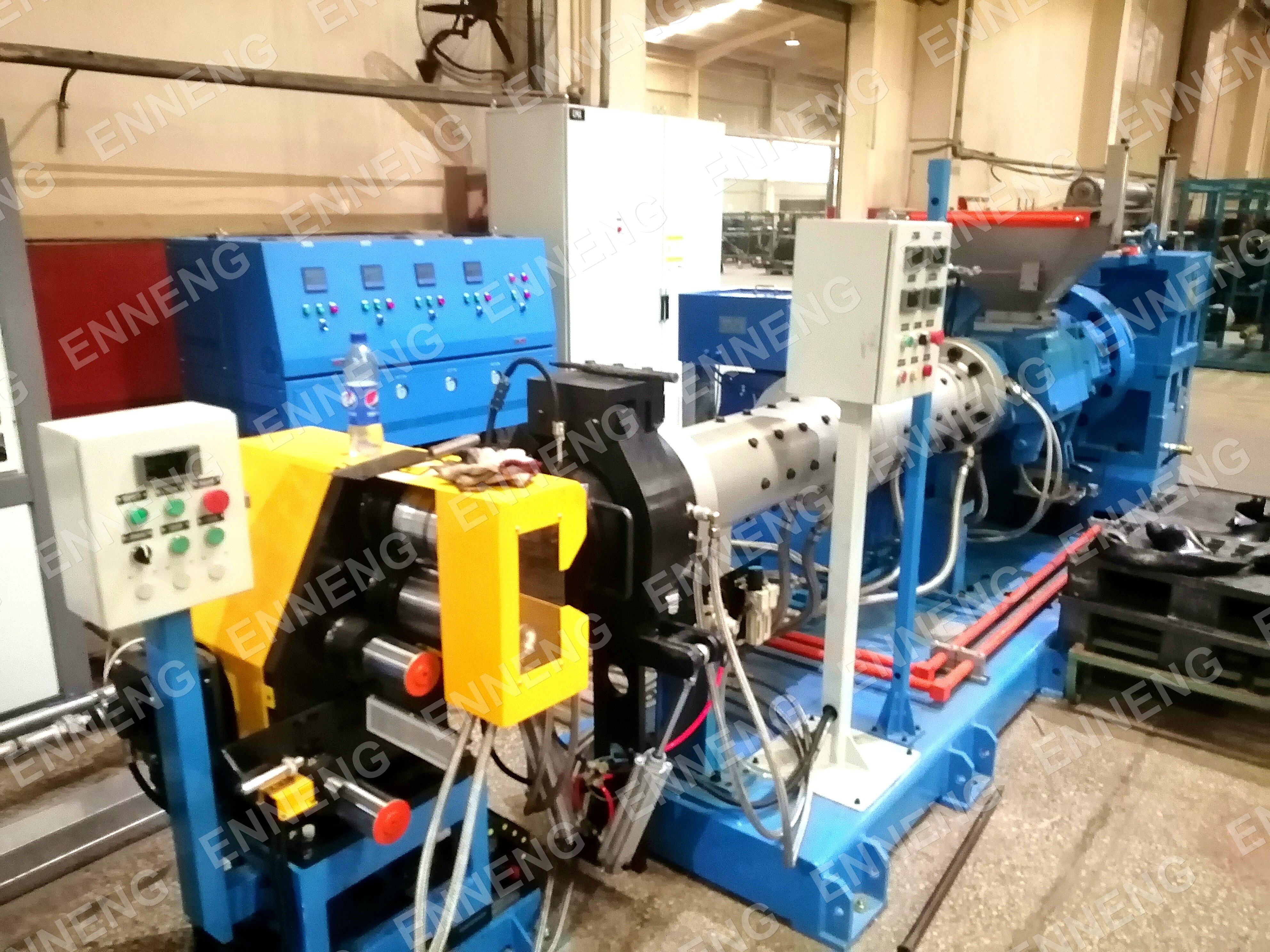
In standard commercial motor procurement, initial capital expense represents less than five percent of total expenditure over a ten-year operating horizon. Routine maintenance, mechanical servicing, and bearing replacements account for roughly five to eight percent, while electrical utility consumption accounts for eighty-seven to ninety-two percent of total ownership expenses.
When plant buyers prioritize lower purchase quotes, they typically select standard induction motors that carry slightly lower initial equipment tags. However, when evaluating PMSM vs Induction Motor Cost over an 8,400-hour annual operating schedule, the slight upfront purchase discount of an induction motor is completely consumed by elevated electric bills within the first nine to fourteen months of continuous operation.
Industrial motors in continuous processing environments regularly achieve 100,000 operating hours over a fifteen-year service life. A 200 kW induction motor operating at 95.0% efficiency consumes roughly 21,052,600 kWh of electrical energy across 100,000 operating hours. At a standard industrial power rate of $0.09 per kWh, total electricity expenditures exceed $1.89 million for that single machine.
An equivalent permanent magnet synchronous motor operating at 97.4% efficiency consumes approximately 20,533,800 kWh under identical load conditions. This 2.4% efficiency improvement saves 518,800 kWh of electric power, conserving over $46,000 in utility charges for a single motor. Across a manufacturing plant operating dozens of continuous drives, the PMSM vs Induction Motor Cost balance proves overwhelmingly favorable for permanent magnet technology.
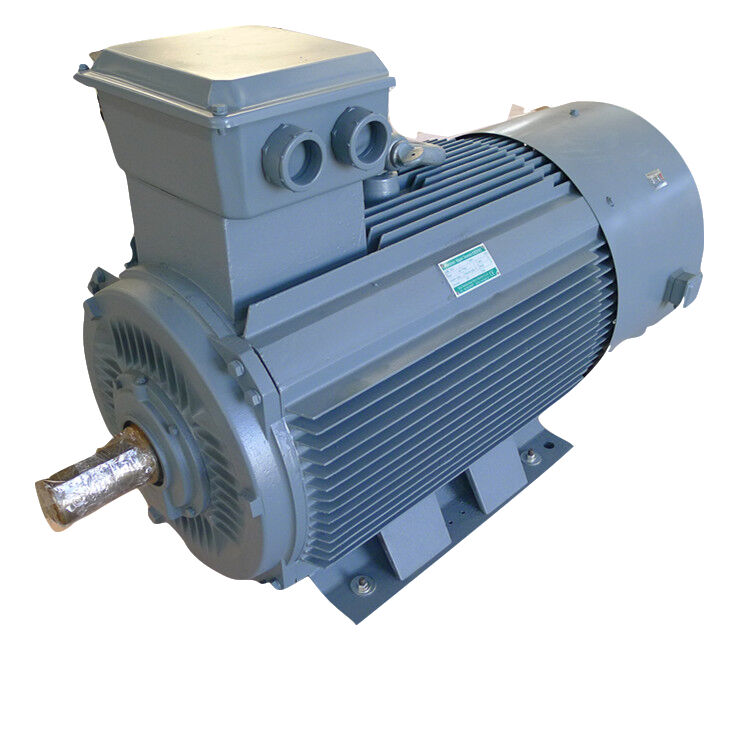
The fundamental efficiency divide between these technologies stems from internal rotor construction and electromagnetic excitation methods. An induction motor requires continuous reactive magnetizing current drawn from the AC electrical grid to induce a secondary magnetic field across rotor squirrel-cage bars. This induced current generates continuous rotor Joule heating (I²R losses), driving internal frame temperatures higher and wasting electrical power.
A permanent magnet synchronous motor incorporates high-coercivity NdFeB permanent magnets directly into the rotor core. These rare-earth magnets establish a strong, continuous magnetic field without drawing magnetizing power from stator windings. Because the rotor rotates in complete synchronism with the stator magnetic field without slip, rotor electrical losses are virtually zero. This fundamental electromagnetic characteristic forms the cornerstone of favorable PMSM vs Induction Motor Cost returns.
|
Engineering Characteristic |
Standard Induction (IE3) |
Permanent Magnet Motor (IE5) |
|
Rotor Field Excitation |
Induced stator current |
Internal permanent magnets |
|
Rotor I²R Slip Losses |
Substantial slip losses |
Zero rotor slip losses |
|
Full Load Efficiency |
94.5% - 95.5% |
97.0% - 98.2% |
|
Partial Load Efficiency (50% Load) |
Drops to 90% - 92% |
Stays high at 96.5% - 97.5% |
|
Operating Power Factor |
0.82 - 0.86 |
0.95 - 0.98 |
|
Typical Thermal Rise |
75°C - 90°C (Class F) |
45°C - 60°C (Cool running) |
|
Bearing Grease Service Life |
20,000 - 25,000 hours |
> 45,000 hours |
Industrial processing machinery such as chemical mixers, centrifugal blowers, slurry pumps, and extruders rarely operates at a continuous 100% rated capacity. Equipment frequently runs across modulated flow and pressure cycles between 40% and 80% capacity. Standard induction motors suffer steep declines in efficiency and operating power factor when mechanical load levels drop below 60%.
Permanent magnet synchronous motors exhibit an exceptionally flat efficiency curve across wide operating bands. Even when throttled down to 35% load, a permanent magnet motor preserves near-nominal efficiency and maintains a power factor above 0.94. In real-world cyclic applications, this sustained partial-load efficiency amplifies operational savings, making the PMSM vs Induction Motor Cost assessment even more compelling.
ENNENG manufactures high-performance permanent magnet synchronous motors engineered for heavy continuous processing industries. Available across a power spectrum from 5kW to 5MW with line voltages from 110V to 690V, these machines incorporate low-loss electrical silicon steel laminations and high-thermal-stability NdFeB magnets resistant to demagnetization up to 180°C.
Operating up to 30°C cooler than equivalent induction motor frames, ENNENG permanent magnet motors protect internal bearing lubricants against thermal oxidation. Vacuum pressure impregnation (VPI) using solventless Class H epoxy resins shields stator conductors against dielectric failure, ensuring uninterrupted service in aggressive operating environments.
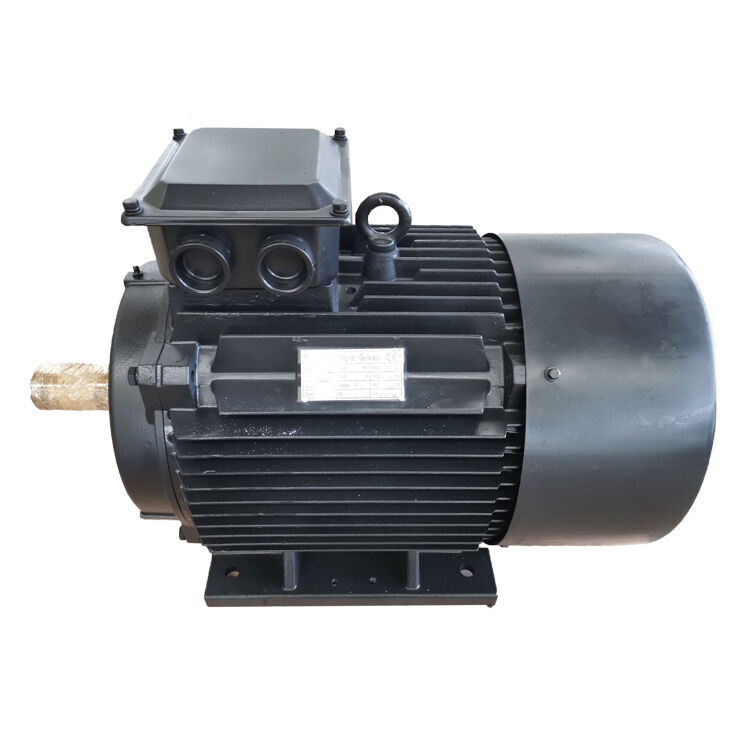
The International Electrotechnical Commission sets global standards for rotating electrical machinery under IEC 60034-30-1 and IEC 60034-30-2. Conventional induction motors generally reach IE2 or IE3 efficiency thresholds, with IE4 requiring significantly larger physical frame dimensions and excessive rotor mass.
Permanent magnet synchronous motors readily attain and exceed IE5 (Ultra-Premium Efficiency) criteria across dynamic speed and torque ranges. IEC 60034-30-2 confirms that IE5 machines eliminate roughly twenty percent of total electrical losses compared to IE4 machines, and over thirty-five percent compared to standard IE3 induction motors. These standardized benchmarks provide verifiable technical criteria for industrial PMSM vs Induction Motor Cost justifications.
National Electrical Code standards (NFPA 70 Article 430) govern electrical sizing parameters for industrial motor branch circuits, disconnect switches, and protective devices. Because induction motors carry low power factors, they draw significant reactive current, requiring heavier electrical cabling and external power factor correction capacitors to avoid utility penalties.
To perform an accurate PMSM vs Induction Motor Cost evaluation, facility engineering and financial teams must utilize structured lifecycle modeling:
In continuous industrial processing applications, the capital purchase premium of permanent magnet synchronous motors achieves a verified financial payback within 9 to 18 months, generating continuous electrical utility savings throughout the remaining service life.
Upgrading continuous industrial machinery with ultra-efficient permanent magnet synchronous motors lowers operating overhead, eliminates utility penalties, and secures long-term plant profitability. Learn how advanced permanent magnet drive systems can modernize facility operations by visiting the ENNENG Contact Page to consult with application engineers.
Q: Why does initial purchase price distort the PMSM vs Induction Motor Cost evaluation?
A: Initial purchase price distorts the evaluation because purchase cost represents less than five percent of a motor’s total lifecycle expenditure. Electrical power consumption accounts for roughly ninety percent of total expenses. Because induction motors waste significant electrical energy through continuous rotor slip and resistive heat losses, their higher utility bills quickly outstrip any initial price savings within months of continuous plant operation.
Q: How quickly can an industrial processing facility recover the investment premium of PMSM drives?
A: Industrial facilities running continuous operations typically recover the capital cost difference within 9 to 18 months. Permanent magnet synchronous motors achieve IE5 Ultra-Premium efficiency, reducing energy losses by thirty-five percent compared to standard IE3 induction motors. These continuous utility bill reductions rapidly pay off initial acquisition cost differences, delivering pure operational savings thereafter.


 EN