
why-vfd-compatible-motor-can-realize-precise-speed-adjustment-for-intelligentmanufacturing-production-process, why-vfd-compatible-motor-can-realize-precise-speed-adjustment-for-intelligentmanufacturing-production-process, /blog
EN

2026/10/15
In automated lithium-ion battery electrode coating lines, multi-axis CNC plastic film extruders, and high-speed robotic bottling conveyors, a speed deviation of even 0.3% across drive rollers causes uneven coating thickness, web tension snapping, and costly batch scrap. Automation engineers integrating intelligent manufacturing execution systems (MES) and closed-loop PLC architectures frequently encounter severe control instability when pairing standard induction motors with variable frequency drives (VFDs)—battling load-induced rotor speed drift, low-frequency overheating, and premature stator insulation breakdown caused by high-frequency inverter voltage spikes.
Conventional squirrel-cage asynchronous motors inherently depend on rotational speed slip between the stator magnetic field and the rotor bars to induce current and produce torque; whenever material viscosity or conveyor friction fluctuates, actual shaft RPM drifts away from the commanded setpoint. Furthermore, operating a non-specialized motor at low VFD frequencies starves it of cooling airflow while subjecting its windings to steep pulse-width modulation (PWM) voltage transients. Deploying a purpose-built VFD Compatible Motor from ENNENG eliminates rotor slip through synchronous permanent magnet locking and protects windings with inverter-grade dielectric insulation, realizing micro-precision speed adjustment across intelligent production lines.
In an asynchronous induction motor, the synchronous speed of the rotating magnetic field is dictated by the VFD output frequency, but the mechanical rotor must always spin 1% to 5% slower to cut magnetic flux lines and generate rotor current. When an intelligent extrusion screw or automated tension winder encounters a sudden change in raw material density, rotor slip changes proportionally, causing an immediate drop or surge in shaft RPM. Simultaneously, modern PWM inverters switch insulated-gate bipolar transistors (IGBTs) at 4 kHz to 16 kHz, generating steep reflected voltage spikes (dV/dt) that erode standard magnet wire enamel and cause capacitive electrical discharge machining (EDM) fluting inside unprotected motor bearings.
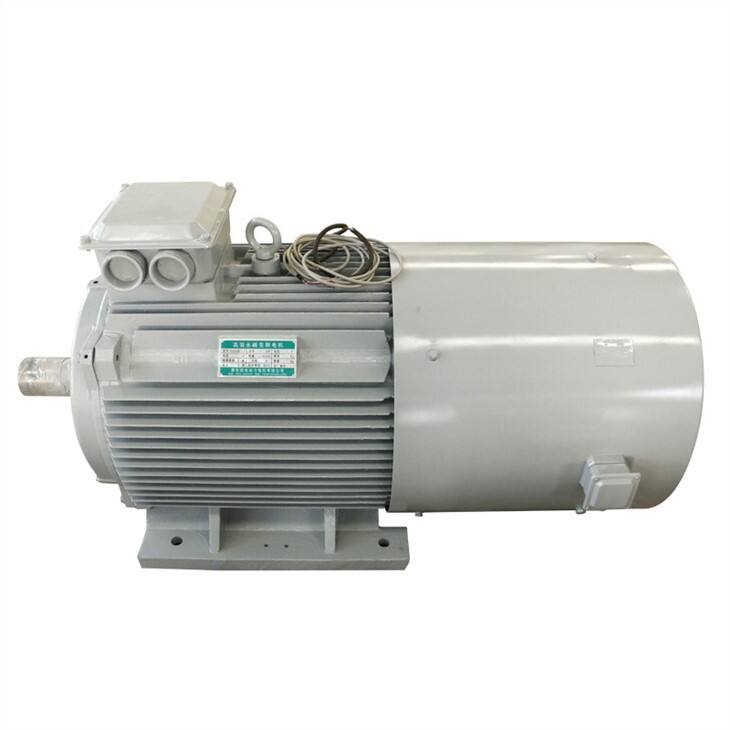
An ENNENG VFD Compatible Motor achieves absolute speed accuracy and inverter durability through a specialized synchronous electromagnetic and dielectric design:
To guarantee long-term dielectric immunity against high-frequency IGBT switching transients, ENNENG constructs every VFD Compatible Motor across a unified voltage range of 110V–690V using vacuum-pressure impregnated (VPI) corona-resistant magnet wire, reinforced phase-to-phase slot liners, and bearing current mitigation options. Furthermore, maintaining a near-unity power factor reduces inverter output current draw, allowing automation engineers to size VFD cabinets more compactly. In addition to smart factory automation drives, ENNENG applies inverter-coupled electromagnetic engineering to industrial generators spanning a unified 5kW–5MW power range (110V–690V) and vertical axis wind turbines from 1kW–10kW, focusing on 3kW, 5kW, and 10kW distributed energy systems.
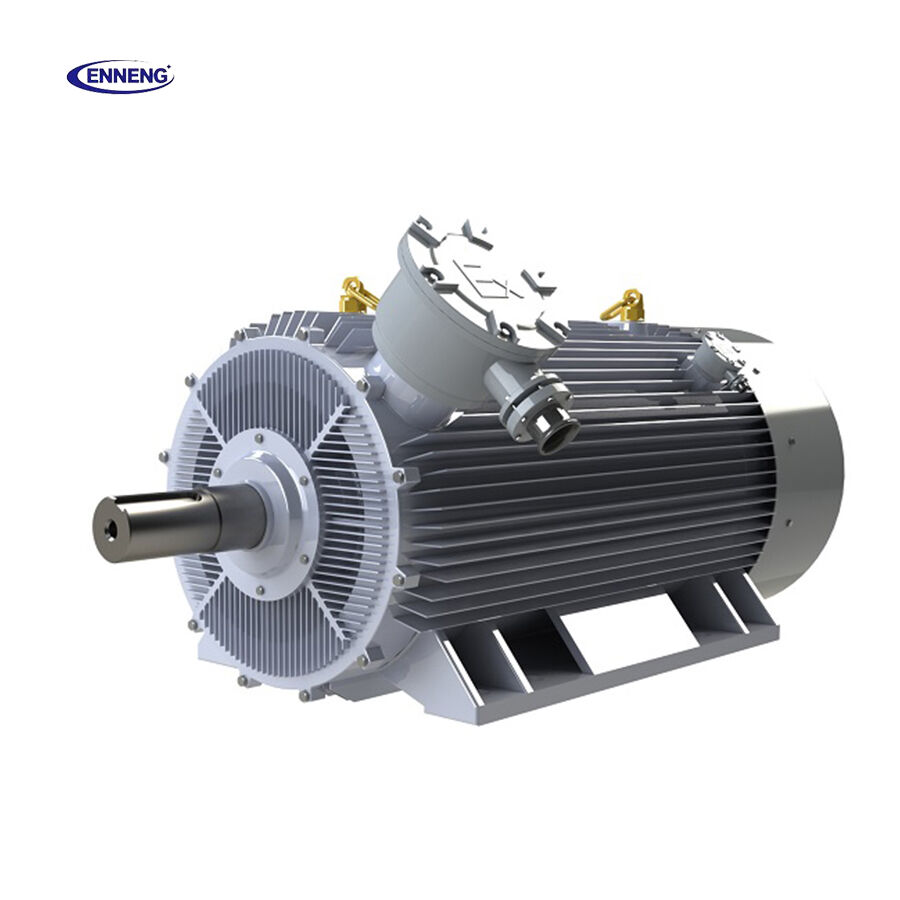
Motors deployed in inverter-driven smart manufacturing lines must satisfy rigorous international dielectric and harmonic standards. ENNENG VFD Compatible Motor insulation systems are engineered in strict accordance with IEC 60034-18-41 (Qualification and type tests for Type I partial-discharge-free electrical insulation systems used in rotating electrical machines fed from voltage converters) and IEC TS 60034-25 guidelines for converter-fed AC machines. Additionally, winding surge withstand capabilities meet NEMA MG 1 Part 31 definite-purpose inverter-fed motor benchmarks, withstanding voltage peaks up to 1600V–3100V with rise times (dV/dt) under 0.1 microseconds without insulation degradation.
In lithium-battery foil coating and multi-zone polymer film extrusion, maintaining exact speed synchronization across multiple driven rollers is critical to preventing web tearing and thickness variations. Integrating an ENNENG VFD Compatible Motor across each drive axis locks roller surface speeds strictly to the master PLC frequency reference.
To achieve micron-level speed precision and zero electrical downtime in automated manufacturing cells, follow these engineering protocols:
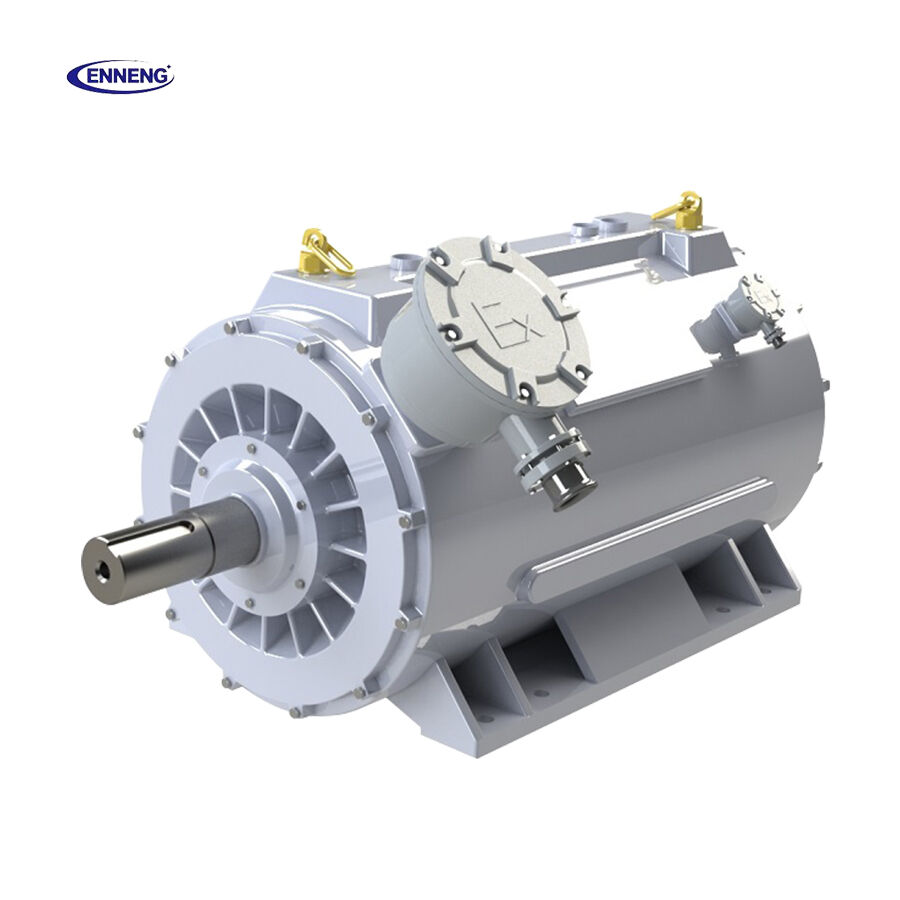
Automated production machinery demands compact footprints, specialized feedback encoder mounts, and compatibility with diverse global inverter brands. ENNENG custom-engineers its VFD Compatible Motor series across the unified 110V–690V range—offering custom B5/B14/B35 flange configurations, integrated rotary encoders or resolvers, and tailored winding inductances to pair effortlessly with any industrial VFD controller.
Contact ENNENG Today.
Consult the ENNENG automation engineering team to customise a VFD Compatible Motor and drive solution for your intelligent manufacturing line.
A: Standard induction motors rely on asynchronous slip between the stator field and rotor bars to create torque, causing shaft speed to drop whenever mechanical load increases. An ENNENG VFD Compatible Motor uses a permanent magnet synchronous rotor that locks directly onto the VFD’s rotating magnetic field vector. This zero-slip physics guarantees that shaft RPM remains strictly proportional to drive frequency regardless of load variations.
A: High-speed IGBT switching in variable frequency drives creates steep voltage spikes (dV/dt) and capacitive shaft voltages that destroy standard motor windings and bearings. ENNENG builds its VFD Compatible Motor with IEC 60034-18-41 corona-resistant magnet wire, vacuum-pressure impregnation (VPI), reinforced phase insulation, and bearing current mitigation options to ensure reliable operation under continuous PWM inverter control.
A: ENNENG manufactures VFD Compatible Motor systems and industrial generators across a unified voltage range of 110V–690V for seamless integration with global inverter cabinets. For industrial power generation and energy recovery, ENNENG offers generators across a unified 5kW–5MW power range, alongside vertical axis wind turbines spanning 1kW–10kW (focusing on 3kW, 5kW, and 10kW models).


 EN