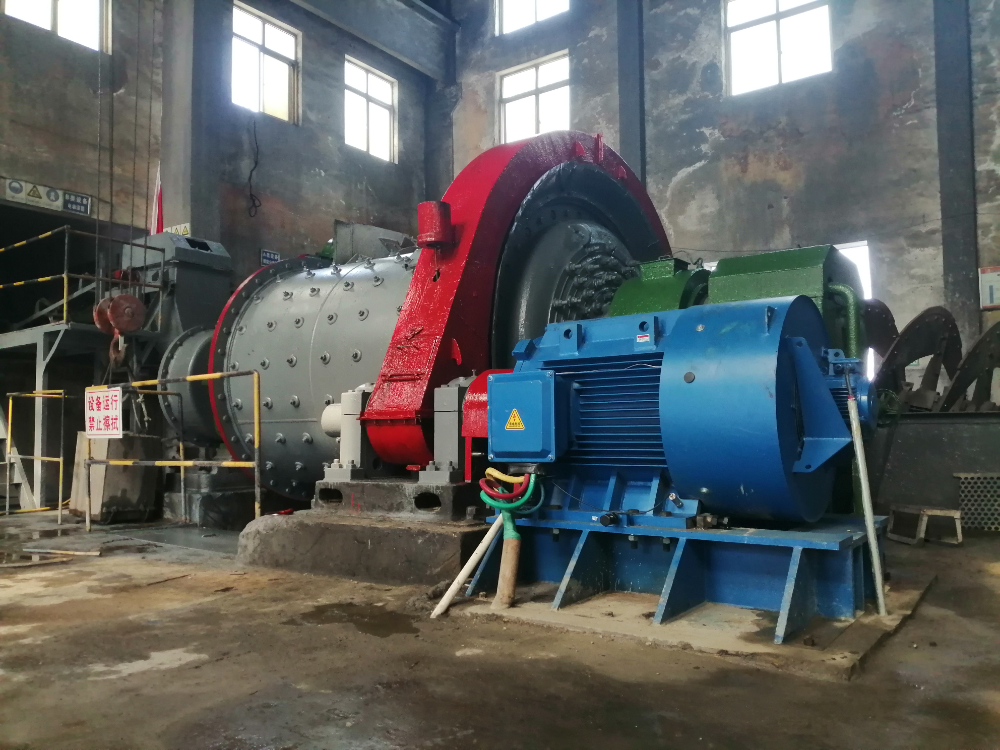
Rubber internal mixers, commonly referred to as Banbury mixers, represent one of the most energy-intensive stages in modern tire manufacturing. The compounding process where raw rubber, carbon black, and chemical additives are fused subjects the drive system to repeated, high-torque load spikes under extreme mechanical resistance. For decades, large DC motors were the standard choice for this duty due to their low-speed torque characteristics. However, the hidden costs of DC drives, including intensive brush maintenance and significant excitation losses, have forced global manufacturers to seek more efficient alternatives.
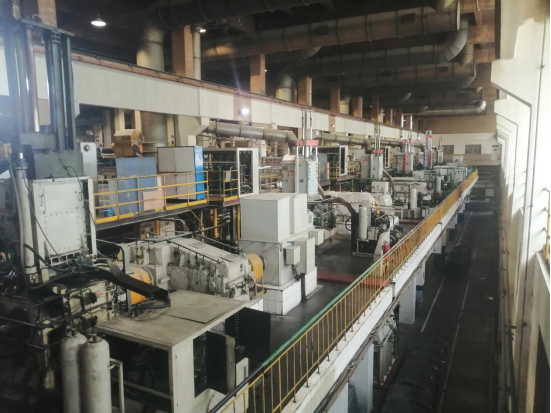
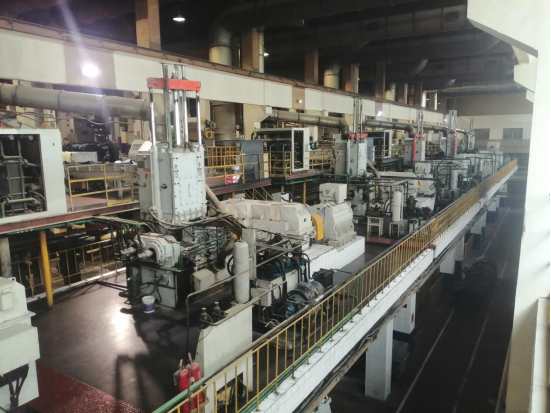
In 2023, ENNENG a premier permanent magnet motor manufacturer supplied high-efficiency permanent magnet synchronous motors (PMSM) for a major energy-saving retrofit at a leading tire manufacturing facility in Shandong. By replacing four 1250kW DC motors on 270L internal mixers with equivalent-power PMSM units, ENNENG demonstrated a defined path to reducing operational costs while enhancing system reliability.
Why Industrial Leaders are Replacing Conventional DC Drives
Limitations of Legacy DC Technology
While DC motors traditionally provided the starting torque required for heavy rubber processing, their mechanical complexity introduces significant risks. Brush wear and commutator maintenance generate recurring downtime and service costs. In the high-precision environment of tire production, carbon dust contamination from brushes can also affect product quality. These factors, combined with lower energy efficiency compared to modern standards, were the primary drivers for the customer to seek a superior permanent magnet motor solution.
Engineering Footprint Compatibility
A critical challenge in any retrofit is the physical integration. Any replacement motor must reproduce the torque and speed profile of the original DC unit without requiring expensive modifications to the existing foundation, coupling, or gearbox interface. ENNENG addressed this through a "same-capacity, same-footprint" engineering approach. Our specialized design allowed for a direct physical swap, ensuring that the new high-speed magnetic motor technology could be integrated without disrupting the facility’s established layout.
ENNENG’s Technical Solution: The TYPCX Series PMSM
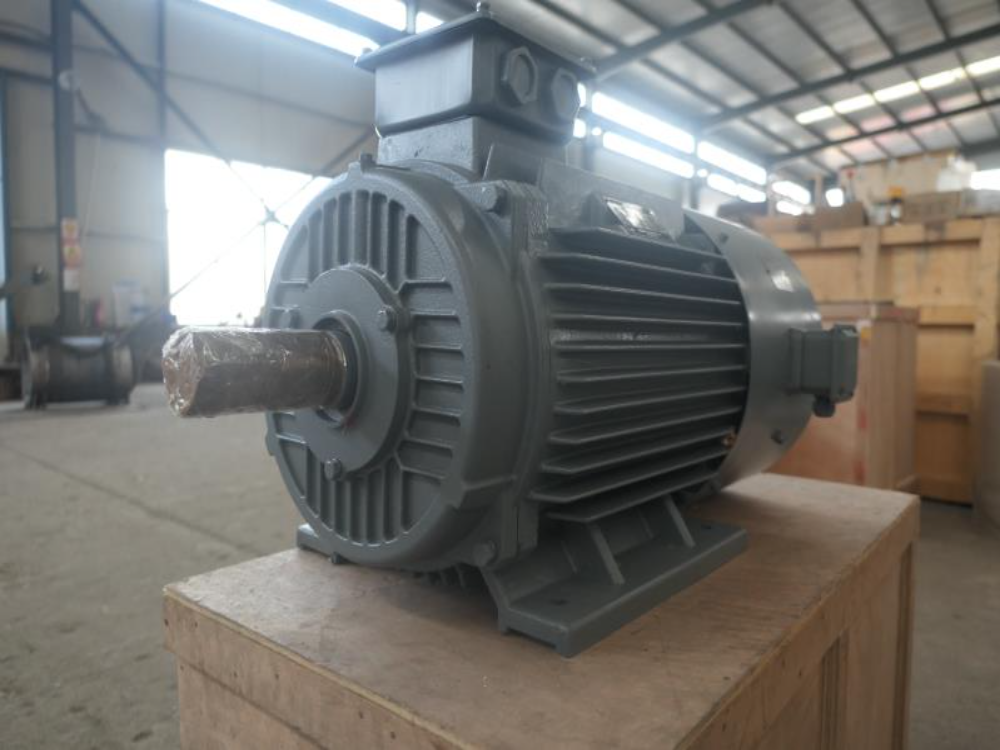
For this 1250kW retrofit, ENNENG utilized the TYPCX-1250-6-SL6 permanent magnet synchronous motor. This model is engineered specifically to replace DC drives in demanding industrial applications such as extruders, rolling mills, and internal mixers.
Advanced Design for Mixing Duty
The TYPCX series features an internal permanent magnet rotor structure, delivering the high-torque, "hard" mechanical characteristics required for rubber compounding. Unlike traditional induction motors, our permanent magnet motor eliminates rotor copper losses, leading to a significantly lower operating temperature rise. This translates to longer bearing life and reduced thermal stress on winding insulation, ensuring reliability under continuous S1 duty.
To handle the unpredictable load spikes of the mixing cycle, ENNENG’s design supports both PG (encoder) and PG-less vector control. When configured with encoder feedback, the motor achieves an overload capability of approximately 2.8 times the rated torque, providing an essential safety margin for the compounding process.
Case Outcome: 14% Energy Savings in Real Production
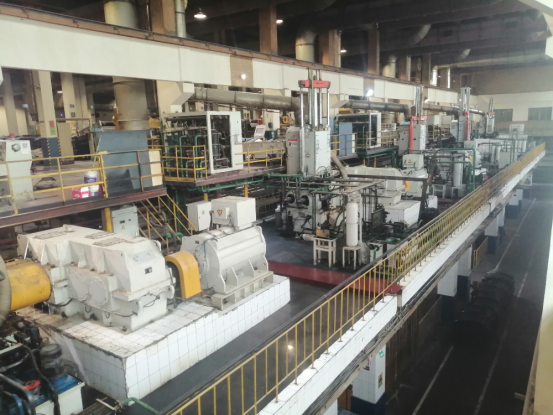
Following the installation across four production lines, the client recorded an average energy saving of 14% compared to the original DC motor configuration. This result reflects real-world operating data from a continuous production schedule, rather than an idealized laboratory estimate.
The Significance of ROI
A 14% reduction in electricity consumption across four 1250kW motors represents a massive recurring saving. The efficiency gain is primarily due to the elimination of DC excitation losses. By switching to a permanent magnet motor, the plant decoupled its energy costs from the inherent inefficiencies of legacy drive technology. This project proves that ENNENG's high-efficiency motors pay for themselves through energy recovery and maintenance reduction within a very short operational window.
Broader Scope: High-Speed Applications and Generator Functions
Internal mixers are not the only area where ENNENG’s PMSM technology excels. Our high-speed magnetic motor series is designed for centrifugal pumps, air compressors, and high-frequency spindles, where reliability at high RPM is paramount.
Furthermore, engineers often explore how electric motor works as generator in industrial recovery. Due to the electromagnetic symmetry of our PMSM units, they are highly effective when utilized as an electric motor as generator. In applications such as downhill conveyors or calender rolls, the permanent magnet rotor induces voltage in the stator without the need for external excitation, allowing factories to feed energy back into the grid. Understanding how electric motor works as generator allows manufacturers to capture kinetic energy that was previously wasted, further optimizing the total energy balance of the plant.
Partner with a Specialist Manufacturer
The 1250kW retrofit at the Shandong tire facility demonstrates that ENNENG's permanent magnet synchronous motors can directly replace heavy-duty DC motors, delivering measurable energy savings and improved mechanical stability. As a dedicated permanent magnet motor manufacturer, ENNENG provides the engineering expertise required to transition legacy industrial plants into high-efficiency, sustainable operations.
For tire and rubber producers operating aging DC-driven fleets, ENNENG offers a proven methodology to reduce energy expenditure without the need for a full system redesign.
Contact ENNENG today to discuss your industrial motor retrofit needs.
FAQ
Q: Can ENNENG's permanent magnet motor directly replace a DC motor on an internal mixer?
A: Yes. We design our motors to match the original torque, speed, and mounting dimensions, ensuring a direct "drop-in" replacement without modifying foundations.
Q: What efficiency standard does the TYPCX series meet?
A: It meets IE4 and above (GB1 high-efficiency classification), significantly outperforming traditional DC and induction motors.
Q: What energy savings were achieved in the 1250kW project?
A: The plant achieved an average of 14% reduction in electricity consumption across four mixers.
Q: How electric motor works as generator in industrial settings?
A: When the permanent magnet rotor is driven by an external mechanical force, it induces a current in the stator. This makes our motors ideal for energy recovery in regenerative load applications.
Q: Does the motor support high overload during mixing cycles?
A: Yes. With encoder feedback, our motors can handle overloads up to 2.8 times the rated torque, providing robust performance during load spikes.

 EN